

The Capitolium or Capitoline Hill between the Forum and the Campus Martius, is one of the Seven Hills of Rome. The hill was earlier known as Mons Saturnius, dedicated to the god Saturn. The word Capitolium first meant the temple of Jupiter Optimus Maximus later built here, and afterwards it was used for the whole hill (and even other temples of Jupiter on other hills), thus Mons Capitolinus (the adjective noun of Capitolium). In an etiological myth, ancient sources connect the name to caput ("head", "summit") and the tale was that, when laying the foundations for the temple, the head of a man was found, some sources even saying it was the head of some Tolus or Olus. The Capitolium was regarded by the Romans as indestructible, and was adopted as a symbol of eternity. By the 16th century, Capitolinus had become Capitolino in Italian, and Capitolium Campidoglio. The Capitoline Hill contains few ancient ground-level ruins, as they are almost entirely covered up by Medieval and Renaissance palazzi (now housing the Capitoline Museums) that surround a piazza, a significant urban plan designed by Michelangelo. The word Capitolium still lives in the English word capitol, and Capitol Hill in Washington, D.C. is widely assumed to be named after the Capitoline Hill. The Capitoline Museums (Italian: Musei Capitolini) is a single museum containing a group of art and archaeological museums in Piazza del Campidoglio, on top of the Capitoline Hill in Rome, Italy. The historic seats of the museums are Palazzo dei Conservatori and Palazzo Nuovo, facing on the central trapezoidal piazza in a plan conceived by Michelangelo in 1536 and executed over a period of more than 400 years. The history of the museum can be traced to 1471, when Pope Sixtus IV donated a collection of important ancient bronzes to the people of Rome and located them on the Capitoline Hill. Since then, the museums' collection has grown to include many ancient Roman statues, inscriptions, and other artifacts; a collection of medieval and Renaissance art; and collections of jewels, coins, and other items. The museums are owned and operated by the municipality of Rome. The statue of a mounted rider in the centre of the piazza is of Emperor Marcus Aurelius. It is a copy; the original being housed on-site in the Capitoline museum. Opened to the public in 1734 under Clement XII, the Capitoline Museums are considered the first museum in the world, understood as a place where art could be enjoyed by all and not only by the owners.

Capitoline Hill and Museums (Campidoglio e Musei Capitolini) Tours and Tickets
🎧 Available audio guides (15)
The Capitolium or Capitoline Hill between the Forum and the Campus Martius, is one of the Seven Hills of Rome. The hill was earlier known as Mons Saturnius, dedicated to the god Saturn. The word Capitolium first meant the temple of Jupiter Optimus Maximus later built here, and afterwards it was used for the whole hill (and even other temples of Jupiter on other hills), thus Mons Capitolinus (the adjective noun of Capitolium). In an etiological myth, ancient sources connect the name to caput ("head", "summit") and the tale was that, when laying the foundations for the temple, the head of a man was found, some sources even saying it was the head of some Tolus or Olus. The Capitolium was regarded by the Romans as indestructible, and was adopted as a symbol of eternity. By the 16th century, Capitolinus had become Capitolino in Italian, and Capitolium Campidoglio. The Capitoline Hill contains few ancient ground-level ruins, as they are almost entirely covered up by Medieval and Renaissance palazzi (now housing the Capitoline Museums) that surround a piazza, a significant urban plan designed by Michelangelo. The word Capitolium still lives in the English word capitol, and Capitol Hill in Washington, D.C. is widely assumed to be named after the Capitoline Hill. The Capitoline Museums (Italian: Musei Capitolini) is a single museum containing a group of art and archaeological museums in Piazza del Campidoglio, on top of the Capitoline Hill in Rome, Italy. The historic seats of the museums are Palazzo dei Conservatori and Palazzo Nuovo, facing on the central trapezoidal piazza in a plan conceived by Michelangelo in 1536 and executed over a period of more than 400 years. The history of the museum can be traced to 1471, when Pope Sixtus IV donated a collection of important ancient bronzes to the people of Rome and located them on the Capitoline Hill. Since then, the museums' collection has grown to include many ancient Roman statues, inscriptions, and other artifacts; a collection of medieval and Renaissance art; and collections of jewels, coins, and other items. The museums are owned and operated by the municipality of Rome. The statue of a mounted rider in the centre of the piazza is of Emperor Marcus Aurelius. It is a copy; the original being housed on-site in the Capitoline museum. Opened to the public in 1734 under Clement XII, the Capitoline Museums are considered the first museum in the world, understood as a place where art could be enjoyed by all and not only by the owners.
Overview
More Info
- There are two separate entrances for visitors with limited mobility, available on request.
- Book a private tour guide to avoid the long lines.
- Strollers are allowed in the museum, but large bags and backpacks must be checked in the free cloakroom.
- The museum has a rooftop café with a beautiful view over Rome.
More Adventures for You


0$
0$
3000$

Price From
1.00 USD
See the sights of the Eternal City on a full-day electric-assist bicycle tour, with a pizza or pasta lunch, and of course, a glass of wine and an espresso is a must! Easy and safe to ride, the bicycle has an electric motor that kicks in when pedaling. As well as allowing you to see the sights with little effort, the bike enables you to cover more ground, too! See the Colosseum and ruins of Ancient Rome; explore the charming neighborhood of Trastevere; visit squares like Piazza Navona; and admire attractions like Rome Pantheon, Trevi Fountain, Spanish Steps, and more._en-US
Learn More
Price From
$112.00 USD
Discover with us the oldest European public collection of antiquities created by Pope Sixtus IV at the end of the XV century! At the beginning or at the end of your holiday, this Museum will help you to make all the pieces of the old roman history fit together and you can't miss the incredible view over the Roman Rorum from the Museum. Some of the masterpieces of the Museum: • Capitoline Square • Main Courtyard (Colossus of Constantine) • Main Staircase (panels of Marcus Aurelius and Hadrian) • Room of Orazi and Curiazi & Room of the Captains (XVI Century frescoes, Bernini's and Algardi's masterpieces) • Ancient Roman bronze sculptures • Room of the She Wolf • Medusa's Head (Bernini) • Marcus Aurelius Exedra • Archaeological Ruins of the ancient Capitoline Temple of Juppiter • Collection of the Roman Horti (monumental gardens of noblemen) • Tabularium (Roman Forum view) • Low courtyard of the New Palace (Marforio Fountain) _en-US
Learn More
Price From
$98.80 USD
Many claim to be Percy Jackson expert guides (even after just watching the films or reading 1 book). Not us, we are 101% Riordan fans at heart and we are real mythology buffs! We won't tell you the same things you already know like the who are the most important gods - bet you know Zeus and Athena already. We will have more exciting stories, more myths and legends and secrets from Roman mythology! Of course, Greek myths too. And we'll throw in some Egyptian and Norse gods in the fun mix. With us, you are in for amazing storytelling and fun learning in a challenging adventure quest! And this is not only for Percy Jackson fans but also for those curious to know more about Roman myths and legends. Jupiter is waiting! _en-US
Learn More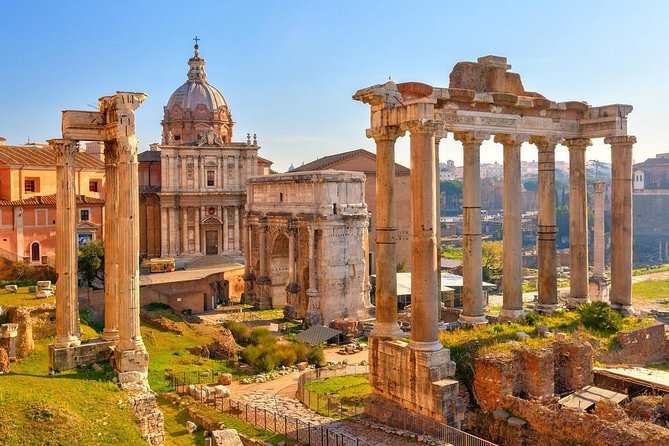

Price From
$35.52 USD
Your experience will begin in our office with a 25-minute multimedia video on Ancient Rome. You will be able to immerse yourself in the history of ancient Rome, seeing the reconstruction of the most important monuments of Rome. In your package you also have included an audio guide of Rome to download on your mobile phone, with more than 170 points of interest, to listen to, exploring every single point of the city. And finally... Welcome to the world’s first museum! Capitoline Museum has a fascinating collection of art and artifacts, all of which tell different stories of the fascinating history of Rome. In 1734, Pope Clementine XII decided to make a significant collection of artwork and ancient sculptures permanently accessible to the people of Rome. With this magnanimous act, he created the world's first museum, located on top of one of the Seven Hills of Rome. You can see the famous she-wolf sculpture featuring Rome's founders Romulus and Remus._en-US
Learn More
For Individuals with Hearing Loss
- Video Guide
- Hearing kits
- Speech To Text
Access for Seniors
- Distance from drop-off location to entrance: Less than 20 m
- Recommended time for visit мore than 3 hours
- Recommended time for visit 1 hour
- Recommended time for visit 2 hours
- Physical difficulty level - 3
Accessibility for wheels
- Special Parking
- Access with Portable Ramp
- Accessible elevator
- Step-Free
- Wide doors >= 75 cm and < 90 cm
- Exhibit height - 2
- Accessible Toilet
Access for Visually Impaired
- Braille description
- Audio Guide
- Place has Special Guide Service
- Service animals permitted
- Touch Gallery
As you step onto the ancient Capitoline Hill in Rome, the air is charged with a sense of history and power. The rough cobblestones beneath your feet whisper stories of emperors and gladiators, of triumphs and betrayals. The imposing facades of the Musei Capitolini loom ahead, their marble columns reaching up to the sky like outstretched arms, inviting you to enter a world frozen in time.
As you pass through the grand entrance, the cool, dim interior envelops you like a cloak. The hushed murmur of other visitors and the faint echo of your own footsteps create a sense of reverence, as if you are treading on sacred ground. The soft light filtering through the high windows bathes the ancient statues and artifacts in a soft glow, highlighting their exquisite details and commanding presence.
You pause before the colossal statue of Marcus Aurelius on horseback, his face set in a stern expression of determination. The sheer scale of the statue is awe-inspiring, its every muscle and sinew rendered in exquisite detail. You can almost feel the power and determination emanating from the stone, as if the emperor himself is watching over you with a piercing gaze.
Moving on, you come face to face with the exquisite beauty of the Venus Capitolina, her graceful form frozen in eternal perfection. The smooth curve of her body and the delicate features of her face evoke a sense of timeless elegance and serenity. You can almost feel the softness of her skin and the gentle rustle of her flowing robes, as if she might step down from her pedestal at any moment.
In the Hall of the Doves, the delicate marble frieze of doves drinking from a fountain seems to come to life before your eyes. The intricate details of their feathers and the playful gestures of their wings create a sense of motion and lightness, as if you can hear the soft cooing of the birds and the gentle splash of water.
As you make your way through the labyrinthine halls and galleries of the museum, each turn reveals a new treasure, a new story waiting to be told. The ancient artifacts and artworks speak to you in a language older than words, stirring emotions deep within your soul. The weight of history and the legacy of centuries past hang heavy in the air, infusing every corner with a sense of gravitas and significance.
And as you reluctantly make your way back to the present, the memory of your visit to the Capitoline Hill and Musei Capitolini lingers like a dream, a fleeting glimpse into a world long gone but never forgotten. The echoes of ancient voices and the whispers of bygone eras follow you out into the bustling streets of Rome, a reminder of the enduring power of art and history to touch the human heart.
The Capitoline Hill and Museums in Rome offer audio guides for visitors with visual impairments. The availability of audio descriptive guides may vary, so it is recommended to inquire at the museum’s information desk upon arrival.
Sensory-friendly hours may also be available at the Capitoline Museums. Visitors should check the museum’s website or contact them directly to inquire about any specific accommodations or events designed for individuals with sensory sensitivities.
As a local writer in Rome, I can tell you that the Capitoline Hill and Museums hold a special place in the hearts of the city’s residents. The hill, with its commanding views of the Roman Forum and the city below, has always been a symbol of power and authority in Rome. The museums, housed in the impressive Palazzo dei Conservatori and Palazzo Nuovo, are home to a vast collection of ancient Roman art and artifacts that tell the story of the city’s rich history.
One of my favorite things to do on a quiet afternoon is to wander through the museums, taking in the sculptures, paintings, and other treasures that have been carefully preserved for centuries. The highlight of the collection, for many locals, is the iconic statue of Marcus Aurelius on horseback, which stands proudly in the center of the Capitoline Square.
For artists, the Capitoline Hill is a constant source of inspiration. The imposing architecture of the museums and the sweeping views of the city provide the perfect backdrop for creating works of art. Many local artists come to the hill to sketch, paint, or simply soak in the atmosphere and let their creativity flow.
Visitors to Rome should not miss the opportunity to explore the Capitoline Hill and Museums, as they offer a unique glimpse into the history and culture of this ancient city. Whether you are an art lover, a history buff, or simply looking for a peaceful place to escape the hustle and bustle of the city, the Capitoline Hill is sure to leave a lasting impression.
Capitoline Hill and Museums (Campidoglio e Musei Capitolini) in Rome are a must-visit for any traveler interested in art, history, and culture. Below is a comprehensive guide to help you plan your visit, including directions and transportation options, ticket booking information, and details on local amenities.
### Directions and Transportation:
#### Public Transport:
- Metro: The closest metro station to Capitoline Hill is Colosseo on Line B. From there, it’s a short walk to the museums.
- Bus: Several bus lines stop near Capitoline Hill, including lines 40, 60, 64, 170, 170F, H, and 628.
- Tram: Tram line 8 also stops near the museums.
#### Accessibility:
- The museums are accessible to visitors with reduced mobility and disabilities. Accessible entrances and facilities are available.
- There are elevators and ramps to help navigate the museum complex.
### Ticket Booking and Discounts:
- Booking: Tickets can be purchased online through the official website of the Musei Capitolini or at the ticket office on-site.
- Discounts: Various discounts are available for EU citizens under 18 or over 65 years old, students under 26, and teachers. Free entry is usually provided for children under 6.
### Local Amenities:
#### Parking:
- Limited parking is available near Capitoline Hill. It is recommended to use public transportation due to restricted vehicle access in the area.
#### Restrooms:
- Restrooms are available within the museum complex. They are equipped with facilities for visitors with disabilities.
#### Dining Options:
- The Capitoline Hill area offers several dining options catering to various dietary needs. From cafes serving quick bites to restaurants offering traditional Italian cuisine, you’ll find something to suit your taste.
Whether you’re exploring the ancient ruins on Capitoline Hill or immersing yourself in the art collections at Musei Capitolini, this guide will help you make the most of your visit to this historic and cultural landmark in Rome. Enjoy your time exploring the treasures of Capitoline Hill and Museums!