

Karlovy Vary (Czech pronunciation: [ˈkarlovɪ ˈvarɪ] (About this soundlisten); German: Karlsbad) is a spa town situated in western Bohemia, Czech Republic, on the confluence of the rivers Ohře and Teplá, approximately 130 km (81 mi) west of Prague (Praha). It is named after Charles IV, Holy Roman Emperor and King of Bohemia, who founded the city in 1370. It is the site of numerous hot springs (13 main springs, about 300 smaller springs, and the warm-water Teplá River), and is the most visited spa town in the Czech Republic. Until 1945, when the German-speaking inhabitants were expelled, the town was overwhelmingly German speaking for most of its history. The city has approximately 48,500 inhabitants. An ancient late Bronze Age fortified settlement was found in Drahovice. A Slavic settlement on the site of Karlovy Vary is documented by findings in Tašovice and Sedlec. People lived in close proximity to the site as far back as the 13th century and they must have been aware of the curative effects of thermal springs. Around 1350, Charles IV, Holy Roman Emperor organized an expedition into the forests surrounding modern-day Karlovy Vary during a stay in Loket. On the site of a spring, he established a spa called the Horké Lázně u Lokte (Hot Spas at Loket). The location was subsequently named "Karlovy Vary" after the emperor, who extolled the healing powers of the hot springs, at least according to legend. Charles IV granted the town privileges on 14 August 1370. Earlier settlements can also be found on the outskirts of today's town. An important political event took place in the town in 1819, with the issuing of the Carlsbad Decrees following a conference there. Initiated by the Austrian Minister of State Klemens von Metternich, the decrees were intended to implement anti-liberal censorship within the German Confederation. Due to publications produced by physicians such as David Becher and Josef von Löschner, the town developed into a famous spa resort in the 19th century and was visited by many members of European aristocracy as well as celebrities from many fields of endeavour. It became even more popular after railway lines were completed from Prague to Cheb in 1870. The number of visitors rose from 134 families in the 1756 season to 26,000 guests annually at the end of the 19th century. By 1911, that figure had reached 71,000, but the outbreak of World War I in 1914 greatly disrupted the tourism on which the town depended. At the end of World War I in 1918, the large German-speaking population of Bohemia was incorporated into the new state of Czechoslovakia in accordance with the Treaty of Saint-Germain-en-Laye (1919). As a result, the German-speaking majority of Karlovy Vary protested. A demonstration on 4 March 1919 passed peacefully, but later that month, six demonstrators were killed by Czech troops after a demonstration became unruly. In 1938, the majority German-speaking areas of Czechoslovakia, known as the Sudetenland, became part of Nazi Germany according to the terms of the Munich Agreement. After World War II, in accordance with the Potsdam Agreement, the vast majority of the people of the town were forcibly expelled because of their German ethnicity. In accordance with the Beneš decrees, their property was confiscated without compensation, and the town was renamed again Karlovy Vary. Since the end of Communist rule in Czechoslovakia in 1989 and the fall of the Soviet Union in 1991, the presence of Russian businesses in Karlovy Vary has steadily increased. In the 19th century, Karlovy Vary became a popular tourist destination, especially known for international celebrities who visited for spa treatment. The city is also known for the Karlovy Vary International Film Festival, which is one of the oldest in the world and one of Europe's major film events. It is also known for the popular Czech liqueur Becherovka and the production of the famous glass manufacturer Moser Glass, which is located in Karlovy Vary. The famous Karlovarské oplatky (Carlsbad wafers) originated in the city in 1867. It has also lent its name to "Carlsbad plums", candied stuffed zwetschgen. The city has been used as the location for a number of film-shoots, including the 2006 films Last Holiday and box-office hit Casino Royale, both of which used the city's Grandhotel Pupp in different guises. Moreover, the Palace Bristol Hotel in Karlovy Vary had been used as a model for The Grand Budapest Hotel movie. Karlovy Vary is also home to ice hockey club HC Karlovy Vary and its junior branch HC Energie Karlovy Vary (juniors).

Karlovy Vary (Carlsbad) Tours and Tickets
🎧 Available audio guides (15)
Karlovy Vary (Czech pronunciation: [ˈkarlovɪ ˈvarɪ] (About this soundlisten); German: Karlsbad) is a spa town situated in western Bohemia, Czech Republic, on the confluence of the rivers Ohře and Teplá, approximately 130 km (81 mi) west of Prague (Praha). It is named after Charles IV, Holy Roman Emperor and King of Bohemia, who founded the city in 1370. It is the site of numerous hot springs (13 main springs, about 300 smaller springs, and the warm-water Teplá River), and is the most visited spa town in the Czech Republic. Until 1945, when the German-speaking inhabitants were expelled, the town was overwhelmingly German speaking for most of its history. The city has approximately 48,500 inhabitants. An ancient late Bronze Age fortified settlement was found in Drahovice. A Slavic settlement on the site of Karlovy Vary is documented by findings in Tašovice and Sedlec. People lived in close proximity to the site as far back as the 13th century and they must have been aware of the curative effects of thermal springs. Around 1350, Charles IV, Holy Roman Emperor organized an expedition into the forests surrounding modern-day Karlovy Vary during a stay in Loket. On the site of a spring, he established a spa called the Horké Lázně u Lokte (Hot Spas at Loket). The location was subsequently named "Karlovy Vary" after the emperor, who extolled the healing powers of the hot springs, at least according to legend. Charles IV granted the town privileges on 14 August 1370. Earlier settlements can also be found on the outskirts of today's town. An important political event took place in the town in 1819, with the issuing of the Carlsbad Decrees following a conference there. Initiated by the Austrian Minister of State Klemens von Metternich, the decrees were intended to implement anti-liberal censorship within the German Confederation. Due to publications produced by physicians such as David Becher and Josef von Löschner, the town developed into a famous spa resort in the 19th century and was visited by many members of European aristocracy as well as celebrities from many fields of endeavour. It became even more popular after railway lines were completed from Prague to Cheb in 1870. The number of visitors rose from 134 families in the 1756 season to 26,000 guests annually at the end of the 19th century. By 1911, that figure had reached 71,000, but the outbreak of World War I in 1914 greatly disrupted the tourism on which the town depended. At the end of World War I in 1918, the large German-speaking population of Bohemia was incorporated into the new state of Czechoslovakia in accordance with the Treaty of Saint-Germain-en-Laye (1919). As a result, the German-speaking majority of Karlovy Vary protested. A demonstration on 4 March 1919 passed peacefully, but later that month, six demonstrators were killed by Czech troops after a demonstration became unruly. In 1938, the majority German-speaking areas of Czechoslovakia, known as the Sudetenland, became part of Nazi Germany according to the terms of the Munich Agreement. After World War II, in accordance with the Potsdam Agreement, the vast majority of the people of the town were forcibly expelled because of their German ethnicity. In accordance with the Beneš decrees, their property was confiscated without compensation, and the town was renamed again Karlovy Vary. Since the end of Communist rule in Czechoslovakia in 1989 and the fall of the Soviet Union in 1991, the presence of Russian businesses in Karlovy Vary has steadily increased. In the 19th century, Karlovy Vary became a popular tourist destination, especially known for international celebrities who visited for spa treatment. The city is also known for the Karlovy Vary International Film Festival, which is one of the oldest in the world and one of Europe's major film events. It is also known for the popular Czech liqueur Becherovka and the production of the famous glass manufacturer Moser Glass, which is located in Karlovy Vary. The famous Karlovarské oplatky (Carlsbad wafers) originated in the city in 1867. It has also lent its name to "Carlsbad plums", candied stuffed zwetschgen. The city has been used as the location for a number of film-shoots, including the 2006 films Last Holiday and box-office hit Casino Royale, both of which used the city's Grandhotel Pupp in different guises. Moreover, the Palace Bristol Hotel in Karlovy Vary had been used as a model for The Grand Budapest Hotel movie. Karlovy Vary is also home to ice hockey club HC Karlovy Vary and its junior branch HC Energie Karlovy Vary (juniors).
Overview
More Info
- The town has 16 different springs to try.
- For the local way, buy a traditional spa cup with a handle and a spout to collect drinking water from the various taps around town.
- Keep an eye out for the Grandhotel Pupp at the far end of the town, the inspiration behind Wes Anderson’s Grand Budapest Hotel.
- Visitors can take a cable car up the mountain near the Grand Pupp—there’s a lookout tower, cafe-restaurant, and butterfly garden at the top.
- A number of different hiking routes set off from the town center.
More Adventures for You


0$
0$
3000$
Price From
$101.02 USD
Walk during this day trip along the world-famous spa. Karlovy Vary is the most famous spa town in the Czech Republic, the history of the city dates back to the 14th century, the time of Charles IV. The curative effects of the local mineral springs were used as treatments on greats such a Tsar Peter the Great and the writer Goethe. One of the most famous attraction is the Hot Spring that spews boiling healing water up to a height of 12 m. In the city you can look forward to a wide range of historical and modern colonnades and taste water from several natural mineral springs. We recommended to taste delicious wafers and traditional liqueur Becherovka, made from a unique blend of herbs and spices. Tour could be operated bilingual._en-US
Learn More
Price From
1.00 USD
Carlsbad was founded in the 14th century by Charles IV. He noticed thermal springs while hunting in this area. After he tried their magic effect, he decided to build a city, which was named in honor of the Emperor. This was the starting point of Karlovy Vary's history. The fame of its resorts spread all over the world very fast. They establish a unique approach to every tour in order to make it as exciting and memorable as possible._en-US
Learn More
Price From
$277.53 USD
Want to capture your amazing honeymoon? Family vacation while the kids are still little? Your perfect couples retreat from everyday busy life? A solo trip without asking strangers to take pictures of you? Stop searching, we got you here! We are the largest network of local vacation photographers in the world! Besides Karlovy Vary, we operate in over 700 destinations worldwide! We always make sure that every special moment of each client is captured well. We believe in our service and quality of our photos so much that we even offer a 100% money back satisfaction guarantee for your photo shoot. Which means, if you don’t like the result of your photo shoot, you can contact us within 7 days and claim your money back! So what are you waiting for? Become one of our hundreds of happy customers by treating yourself to this special experience! Your family and friends will love the result too! _en-US
Learn More
Welcome to a journey through the historic and picturesque cities of Karlovy Vary and Prague, a visually stunning and emotionally captivating experience awaits you. Close your eyes and let your senses guide you through this audio descriptive tiflo tour.
As you arrive in Karlovy Vary, you are greeted by the soothing sound of the Teplá River gently flowing through the cobblestone streets. The air is filled with the warm aroma of traditional spa wafers being freshly baked, inviting you to take a bite and savor the buttery sweetness melting on your tongue.
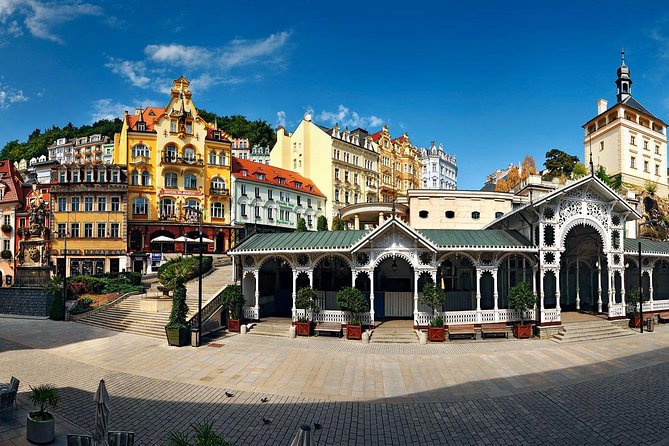
Picture yourself strolling along the colorful row of pastel-hued buildings, each one adorned with intricate architectural details that whisper tales of a bygone era. The ornate facades glow in the sunlight, casting a golden hue over the bustling town square where locals and tourists alike gather to admire the beauty of their surroundings.
Take a moment to pause by the iconic Mill Colonnade, its majestic pillars reaching towards the sky like outstretched arms. Feel the cool marble beneath your fingertips as you trace the intricate carvings that tell stories of ancient healing waters and rejuvenation.
As you make your way to the Diana Observation Tower, the panoramic views of the rolling hills and lush forests unfold before you like a painting come to life. The gentle breeze carries the scent of pine needles and wildflowers, filling your lungs with the crisp freshness of the Czech countryside.
Now, transport yourself to the enchanting city of Prague, where the majestic Prague Castle looms over the city like a guardian watching over its people. The cobbled streets echo with the footsteps of centuries past, each one leaving a faint imprint on the city’s rich tapestry of history and culture.
Step inside the St. Vitus Cathedral and marvel at the kaleidoscope of colors that dance across the stained glass windows, casting a magical glow over the ancient stone pillars. The ethereal sound of a choir singing echoes through the cathedral, sending shivers down your spine and filling your heart with a sense of awe and reverence.
Wander through the charming lanes of the Lesser Town, where hidden courtyards and quaint cafes beckon you to discover their secrets. The scent of freshly brewed coffee mingles with the sweet aroma of flaky pastries, creating a symphony of flavors that tantalize your taste buds.
As the sun sets over the Vltava River, watch as the golden light bathes the iconic Charles Bridge in a warm embrace, casting long shadows that playfully dance along the cobblestones. The distant notes of a street musician’s violin drift through the air, wrapping you in a cocoon of nostalgic melody that tugs at your heartstrings.
Open your eyes and find yourself standing in the heart of these two enchanting cities, where the past and present blend seamlessly to create a tapestry of emotions that will linger in your soul long after you have left. Embrace the beauty, the history, and the magic of Karlovy Vary and Prague, for they are the keepers of stories waiting to be told.
In Karlovy Vary (Carlsbad), it is recommended to contact specific attractions or venues directly to inquire about the availability of audio descriptive guides and sensory-friendly hours. Some attractions may offer these services upon request.
In Prague, the availability of audio descriptive guides and sensory-friendly hours may vary depending on the attraction or venue. It is advisable to check with individual museums, galleries, and cultural sites for more information on their accessibility services.
Overall, the Czech Republic is working to improve accessibility for visitors with disabilities and special needs, but it’s always best to contact specific locations in advance to ensure a smooth and enjoyable experience.
Karlovy Vary, also known as Carlsbad, is a picturesque spa town located in the western part of the Czech Republic. Famous for its thermal springs and elegant architecture, Karlovy Vary has been a popular destination for visitors seeking relaxation and wellness for centuries. To provide a glimpse into the local insights and experiences of this charming town, we have gathered some perspectives from local writers and artists.
Veronika, a local writer, shares her thoughts on the allure of Karlovy Vary: "Karlovy Vary is like a fairy tale come to life. The grandeur of the colonnades, the soothing sound of the thermal springs, and the colorful facades of the buildings create a sense of magic that is hard to find elsewhere. As a writer, I find inspiration in the history and beauty of this town, and I love wandering the streets and discovering hidden gems around every corner."
For local artist Pavel, Karlovy Vary is a treasure trove of inspiration: "The architecture of Karlovy Vary is simply stunning. The intricate details of the buildings, the ornate facades, and the rich history all provide endless inspiration for my artwork. I love capturing the beauty of the town through my paintings, and I find that every time I pick up my brush, I discover new perspectives and hidden stories waiting to be told."
In addition to its architectural beauty, Karlovy Vary is also known for its annual international film festival, which attracts filmmakers and cinephiles from around the world. Anna, a local film enthusiast, shares her perspective on the festival: "The Karlovy Vary International Film Festival is a highlight of the town’s cultural calendar. It brings a vibrant energy to the streets, with screenings, red carpet events, and discussions with filmmakers. I love being a part of this exciting atmosphere and seeing how the town transforms during the festival."
Whether you are seeking relaxation at the spa, exploring the historic architecture, or immersing yourself in the cultural events, Karlovy Vary has something to offer for every visitor. The perspectives of local writers and artists provide a deeper insight into the unique charm and allure of this enchanting town, making it a must-visit destination in the Czech Republic.
### Directions and Transportation:
#### Karlovy Vary (Carlsbad):
- By Train: The train station in Karlovy Vary is well-connected with regular services from major cities like Prague. The station is centrally located, making it convenient to reach the city center.
- By Bus: There are also bus services available connecting Karlovy Vary with other cities in the Czech Republic. The bus station is situated close to the city center for easy access.
- By Car: If you prefer driving, Karlovy Vary is easily accessible by car with good road connections. Parking spaces are available throughout the city.
#### Prague:
- By Train: Prague has excellent train connections with other cities in the Czech Republic and neighboring countries. The main train station, Praha hlavní nádraží, is centrally located.
- By Bus: There are various bus stations in Prague, offering services to different destinations. The Florenc Bus Station is one of the main hubs for long-distance buses.
- By Tram and Metro: Prague has an extensive public transport network of trams and metros, providing convenient ways to navigate the city.
### Ticket Booking and Discounts:
#### Karlovy Vary (Carlsbad):
- Train and bus tickets to Karlovy Vary can be purchased online through the respective websites of Czech Railways or bus companies.
- Discounts may be available for students, seniors, or children, so make sure to check for any offers when booking your tickets.
#### Prague:
- Train tickets for domestic and international journeys can be booked online through Czech Railways’ website or at the train stations.
- Bus tickets for travel within the Czech Republic or to neighboring countries can be booked online through various bus company websites or at the bus stations.
- Prague public transport tickets can be purchased at metro stations, newsstands, or through the official transportation app. Different ticket types and discounts are available, including day passes for tourists.
### Local Amenities:
#### Karlovy Vary (Carlsbad):
- Parking: There are parking lots and street parking available in Karlovy Vary, but it can get crowded during peak tourist seasons.
- Restrooms: Public restrooms are located throughout the city, especially in high-traffic areas and near tourist attractions.
- Dining Options: Karlovy Vary offers a variety of restaurants and cafes, including options for different dietary preferences like vegetarian or gluten-free.
#### Prague:
- Parking: Parking can be challenging in the city center, but there are public parking lots, garages, and on-street parking available. Consider using park-and-ride facilities if you’re driving into Prague.
- Restrooms: Public restrooms are typically found in shopping malls, museums, and tourist attractions in Prague.
- Dining Options: Prague boasts a diverse culinary scene with restaurants catering to different tastes, including vegetarian, vegan, and international cuisines. Dietary needs can be accommodated in most establishments.