

Santi Quattro Coronati is an ancient basilica in Rome, Italy. The church dates back to the 4th (or 5th) century, and is devoted to four anonymous saints and martyrs. The complex of the basilica with its two courtyards, the fortified Cardinal Palace with the Saint Silvester Chapel, and the monastery with its cosmatesque cloister is built in a silent and green part of Rome, between the Colosseum and San Giovanni in Laterano, in an out-of-time setting. Tradition holds the first church on the site was begun by Pope Miltiades, in the 4th century on the north side of the Coelian Hill. One of the first churches of Rome, it bore the Titulus Aemilianae from the name of the foundress, who probably owned the elaborate Roman villa, whose structure is evident under the church. The church was completed by the end of the 6th century, and because of its proximity to the medieval papal residence of the Lateran Palace, it became prominent in its day. The first renovations occurred under Pope Leo IV (847-855), who built the crypt under the nave, added to side aisles, enclosed the courtyard before the facade, and built the belltower and the chapels of Saints Barbara and Nicholas. The new remarkable basilica, Carolingian architecture in style, was 95 m long and 50 m wide. This church, however, was burned to the ground by Robert Guiscard's troops during the Norman Sack of Rome (1084). Instead of rebuilding the original basilica to scale, Pope Paschal II built a smaller basilica with a two courtyards, one in front of the other; the first corresponding to the original 9th century courtyard, while the second was sited over the initial part of the nave. The two aisles were included in the Cardinal Palace (right) and in the Benedictine monastery founded by Paschal himself (left). The original apse of the basilica, however, was preserved, and seems oversized for the new church, whose nave was divided into three parts by means of columns. The new church was consecrated on 20 January 1116. In 1338 it was a possession of the Sassovivo Abbey. In the 13th century a Cosmatesque cloister was added. The Cardinal Palace was enlarged by cardinal Stefano Conti, a nephew of Pope Innocent III. Cardinal Conti also transformed the palace into a fortress, to shelter Popes in the Lateran during the conflict with the Hohenstaufen emperors. In 1247, the chapel of St Sylvester, on the ground floor of the fortress, was consecrated; it contains frescoes depicting the stories of Pope Silvester I and Emperor Constantine I, among which the un-historical baptism of the emperor, as well as a depiction of the Donation of Constantine. Painted in the backdrop of political struggles between Pope Innocent IV and the freshly excommunicated holy Roman emperor Frederick II, the frescoes are meant to underscore the desired sovereignty of the Church (Pope Silvester) over the Empire (Constantine). When the Popes moved to Avignon (14th century), the Cardinal Palace fell into ruin. Thus, upon the return of the Popes to Rome with Pope Martin V, a restoration was necessary. However, when the Papal residence moved from the Lateran to the Vatican palace, this basilica lost importance. In 1564, Pope Pius IV entrusted the basilica and the surrounding buildings to the Augustinians, who still serve it. The interest in the history of this complex renewed in 1913, thanks to the work of the Fine Arts Superintendent Antonio Muñoz. Once the building became an orphanage, the Augustinian nuns put a revolving drum by its entrance which was used as a deposit "box" for unwanted babies.

Basilica of Santi Quattro Coronati (Basilica dei Santi Quattro Coronati) Tours and Tickets
🎧 Available audio guides (5)
Santi Quattro Coronati is an ancient basilica in Rome, Italy. The church dates back to the 4th (or 5th) century, and is devoted to four anonymous saints and martyrs. The complex of the basilica with its two courtyards, the fortified Cardinal Palace with the Saint Silvester Chapel, and the monastery with its cosmatesque cloister is built in a silent and green part of Rome, between the Colosseum and San Giovanni in Laterano, in an out-of-time setting. Tradition holds the first church on the site was begun by Pope Miltiades, in the 4th century on the north side of the Coelian Hill. One of the first churches of Rome, it bore the Titulus Aemilianae from the name of the foundress, who probably owned the elaborate Roman villa, whose structure is evident under the church. The church was completed by the end of the 6th century, and because of its proximity to the medieval papal residence of the Lateran Palace, it became prominent in its day. The first renovations occurred under Pope Leo IV (847-855), who built the crypt under the nave, added to side aisles, enclosed the courtyard before the facade, and built the belltower and the chapels of Saints Barbara and Nicholas. The new remarkable basilica, Carolingian architecture in style, was 95 m long and 50 m wide. This church, however, was burned to the ground by Robert Guiscard's troops during the Norman Sack of Rome (1084). Instead of rebuilding the original basilica to scale, Pope Paschal II built a smaller basilica with a two courtyards, one in front of the other; the first corresponding to the original 9th century courtyard, while the second was sited over the initial part of the nave. The two aisles were included in the Cardinal Palace (right) and in the Benedictine monastery founded by Paschal himself (left). The original apse of the basilica, however, was preserved, and seems oversized for the new church, whose nave was divided into three parts by means of columns. The new church was consecrated on 20 January 1116. In 1338 it was a possession of the Sassovivo Abbey. In the 13th century a Cosmatesque cloister was added. The Cardinal Palace was enlarged by cardinal Stefano Conti, a nephew of Pope Innocent III. Cardinal Conti also transformed the palace into a fortress, to shelter Popes in the Lateran during the conflict with the Hohenstaufen emperors. In 1247, the chapel of St Sylvester, on the ground floor of the fortress, was consecrated; it contains frescoes depicting the stories of Pope Silvester I and Emperor Constantine I, among which the un-historical baptism of the emperor, as well as a depiction of the Donation of Constantine. Painted in the backdrop of political struggles between Pope Innocent IV and the freshly excommunicated holy Roman emperor Frederick II, the frescoes are meant to underscore the desired sovereignty of the Church (Pope Silvester) over the Empire (Constantine). When the Popes moved to Avignon (14th century), the Cardinal Palace fell into ruin. Thus, upon the return of the Popes to Rome with Pope Martin V, a restoration was necessary. However, when the Papal residence moved from the Lateran to the Vatican palace, this basilica lost importance. In 1564, Pope Pius IV entrusted the basilica and the surrounding buildings to the Augustinians, who still serve it. The interest in the history of this complex renewed in 1913, thanks to the work of the Fine Arts Superintendent Antonio Muñoz. Once the building became an orphanage, the Augustinian nuns put a revolving drum by its entrance which was used as a deposit "box" for unwanted babies.
Overview
More Info
- Suitable for art and architecture buffs of all ages.
- A modest dress code is required to enter places of worship.
- The site is not wheelchair and stroller accessible.
- A moderate amount of walking is involved. Wear comfortable shoes.
- If you want to see the profane frescoes, make arrangements ahead of time.
- Tours may include round trip hotel transfers. Check specific tours for details.
More Adventures for You


0$
0$
3000$


Price From
$55.51 USD
What exactly can you expect from this tour? Immerse yourself in the Rome of the Popes, where stories, wonders, legends and reality blur and harmonize with today's Rome. You will be guided by one of our local, certified tour guides. What makes our guides special is their passion for Rome and they want to share it with you. Highlights of the tour: On this tour, you will experience "Santa Maria Maggiore", which contains one of the four Holy Doors. Then we will reveal the hidden basilica "Santa Prasede" and its secrets. Followed by "San Pietro in Vincoli" where you will see the statue of Moses by Michelangelo and the miraculous chains of St. Peter. Then we will visit two of the oldest churches in the city: "Santi Quattro Coronati" with the legend of Pope Sylvester "San Clemente", dedicated to the fourth Pope "Clemens I" The tour culminates in a visit to the arch-basilica of "San Giovanni in Laterano", which contains another of the four Holy Doors._en-US
Learn More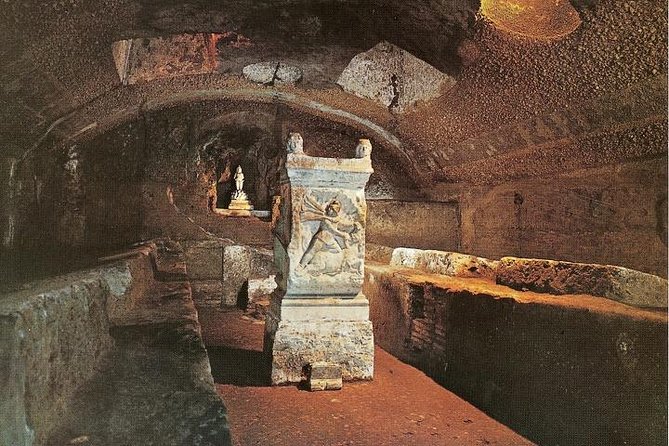
Price From
4.00 USD
Half day walking tour in a small group of Christian Rome to discover the underground treasures in some of the most sensational churches. The tour starts in the Lateran area, visit of St. John Lateran Basilica, the oldest of the four Papal Basilicas, considered “The Church of Rome”, the mother of all churches The Cathedral, the place where the Bishop has the seat. Then the tour continues with the visit of St. Clement’s Basilica, the only church in Rome to be built on 3 different levels, from the 1st to the 12th century and the underground floors can be explored, including the altar of Mithras from the 1st century. The visit ends with St. Peter’s in Chains Basilica, called like that for the chains that, according to the tradition, Helene Constantine’s mother brought in Rome and for a miracle where joined to the other St. Peter’s chain in Rome. The church, is famous also for the statue of Moses, created by Michelangelo the tomb of the Pope Julius II._en-US
Learn More
Price From
4.00 USD
Half-day walking tour of Christian Rome to discover the underground treasures of some of the most sensational churches. The tour begins in the Lateran area, whose name derives from the family that owned the territory where the first Popes resided before going to Avignon in France and then returning to Rome in the Vatican area. Visit to the Basilica of San Giovanni in Laterano, the oldest of the four Papal Basilicas, considered "The Church of Rome", the mother of all churches. The tour continues with a visit to the Basilica of San Clemente, the only church in Rome to be built on 3 different levels, from the 1st to the 12th century and you can explore the underground floors, including the 1st century Mithras Altar. Continue towards the Church of Santi Quattro Coronati, dedicated to four anonymous saints and martyrs. The visit ends with the Basilica of San Pietro in Vincoli renowned for the statue of Moses that Michelangelo created in 1545 for the tomb of Pope Julius II._en-US
Learn More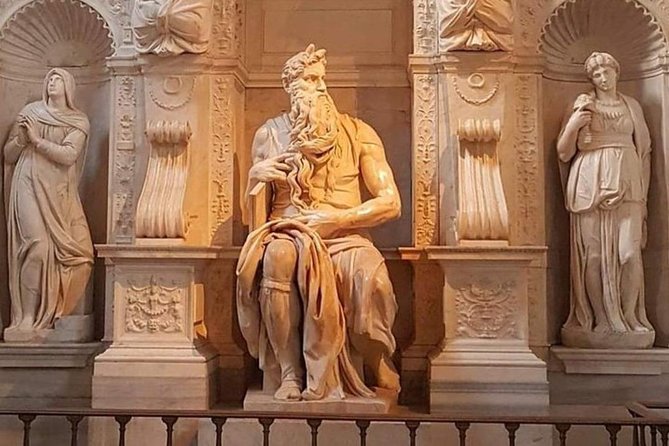

Accessibility for wheels
- Access with Portable Ramp
- Can have severe slope, cobblestones, and/or gravel
- Accessible elevator
- Easy without assistance
- Wide doors >= 75 cm and < 90 cm
- Accessible Toilet
Access for Visually Impaired
- Service animals permitted
Access for Seniors
- Physical difficulty level - 3
As you step through the ancient gates of the Basilica of Santi Quattro Coronati in Rome, a wave of calm washes over you. The air is cool and still, carrying a faint scent of incense that hangs in the air. The sound of your footsteps on the worn stone floor echoes through the vast space, mingling with the hushed whispers of other visitors. The soft glow of candlelight dances across the walls, casting shadows that seem to come alive in the dim light.
As you move deeper into the basilica, you can feel the weight of history pressing down on you. The walls are lined with centuries-old frescoes, their colors faded with time but still vibrant in their storytelling. Each brushstroke seems to hold a piece of the past, a glimpse into the lives of those who once walked these halls. You can almost hear the voices of the artists, echoing through the ages, their passion and devotion shining through in every stroke.
Turning a corner, you come face to face with the breathtaking beauty of the apse. Golden light streams in through the stained glass windows, painting the space in a warm, ethereal glow. The altar stands bathed in this celestial light, a symbol of faith and reverence. The intricate carvings and mosaics that adorn the walls seem to come alive in the shifting light, telling stories of saints and martyrs in a language all their own.
As you stand in awe of the sacred space around you, a sense of peace fills your soul. The weight of the world falls away, leaving only a profound sense of calm and tranquility. For a moment, you are suspended in time, caught between the past and the present, the earthly and the divine. In this moment, you are connected to something greater than yourself, a presence that transcends words and understanding.
As you reluctantly make your way back towards the entrance, a sense of gratitude fills your heart. Gratitude for the opportunity to experience this place of wonder and beauty, gratitude for the artists and architects who poured their hearts and souls into creating this sacred space. And above all, gratitude for the chance to connect with something larger than yourself, to feel the presence of the divine in every stone and brushstroke.
As you step back out into the bustling streets of Rome, the memory of your visit lingers like a quiet prayer in your heart. The world seems a little brighter, a little more alive, as you carry with you the peace and beauty of the Basilica of Santi Quattro Coronati. And in that moment, you know that you have been forever changed by this emotional journey of visitation.
The Basilica of Santi Quattro Coronati in Rome does not provide specific information regarding the availability of audio descriptive guides or sensory-friendly hours on their website. It is recommended to contact the basilica directly to inquire about these services and accommodations for visitors with disabilities.
The Basilica of Santi Quattro Coronati, located on the Caelian Hill in Rome, is a hidden gem that often gets overlooked by tourists. Local artists and writers, however, are drawn to this ancient site for its rich history and peaceful atmosphere.
One local artist, Alessandra, finds inspiration in the quiet courtyard of the basilica, where she sets up her easel to paint the intricate details of the 12th-century cloisters. The delicate carvings and elegant archways provide a sense of serenity that she can’t find elsewhere in the bustling city.
Another writer, Marco, often comes to the basilica to escape the chaos of Rome and find solace in the ancient frescoes that adorn the walls of the church. The stories depicted in the artwork speak to him on a deep level, connecting him to the struggles and triumphs of the past.
Both Alessandra and Marco appreciate the sense of timelessness that permeates the Basilica of Santi Quattro Coronati. In a city known for its fast-paced lifestyle and constant influx of tourists, this sacred space offers a retreat from the modern world and a glimpse into the history of Rome.
Visitors to the basilica can also experience the local perspective by exploring the nearby neighborhood of Celio, where charming cafes and picturesque streets provide a glimpse into everyday life in Rome. Taking the time to wander through the cobblestone streets and interact with the friendly locals can give a deeper understanding of the cultural richness that surrounds the Basilica of Santi Quattro Coronati.
The Basilica of Santi Quattro Coronati, located in Rome, can be easily reached using public transportation. The nearest metro station is Colosseo (Line B), and the basilica is about a 15-minute walk from there. Additionally, several bus lines, such as 85, 87, and 117, have stops near the basilica.
For visitors with mobility challenges, it’s recommended to contact the basilica in advance to inquire about accessible entrances and facilities. The basilica is committed to providing access to all visitors, and arrangements can be made to ensure a comfortable visit.
Tickets to visit the Basilica of Santi Quattro Coronati can be purchased on-site. There are no online booking options available, so it is recommended to arrive early to avoid long lines, especially during peak tourist seasons. Discounts are typically available for students, seniors, and large groups, so be sure to inquire about any available discounts upon ticket purchase.
In terms of local amenities, there is limited parking available near the basilica, so it’s best to use public transportation or taxis to reach the location. Restrooms are available within the basilica for visitors. Additionally, there are dining options nearby that cater to various dietary needs, including vegetarian, vegan, and gluten-free options. It is recommended to check with the individual restaurants for specific dietary accommodations.