

The Jardin du Luxembourg, also known in English as the Luxembourg Gardens, is located in the 6th arrondissement of Paris, France. It was created beginning in 1612 by Marie de' Medici, the widow of King Henry IV of France, for a new residence she constructed, the Luxembourg Palace. The garden today is owned by the French Senate, which meets in the Palace. It covers 23 hectares and is known for its lawns, tree-lined promenades, flowerbeds, model sailboats on its circular basin, and picturesque Medici Fountain, built in 1620. The name Luxembourg comes from the Latin Mons Lucotitius, the name of the hill where the garden is located. In 1611, Marie de' Medici, the widow of Henry IV and the regent for the King Louis XIII decided to build a palace in imitation of the Pitti Palace in her native Florence. She purchased the hotel du Luxembourg (today the Petit-Luxembourg palace) and began construction of the new palace. She commissioned Salomon de Brosse to build the palace and a fountain, which still exists. In 1612 she planted 2,000 elm trees, and directed a series of gardeners, most notably Tommaso Francini, to build a park in the style she had known as a child in Florence. Francini planned two terraces with balustrades and parterres laid out along the axis of the chateau, aligned around a circular basin. He also built the Medici Fountain to the east of the palace as a nympheum, an artificial grotto and fountain, without its present pond and statuary. The original garden was just eight hectares in size. In 1630 she bought additional land and enlarged the garden to thirty hectares, and entrusted the work to Jacques Boyceau de la Barauderie, the indendant of the royal gardens of Tuileries and the early garden of Versailles. He was one of the early theorists of the new and more formal garden à la française, and he laid out a series of squares along an east-west alley closed at the east end by the Medici Fountain, and a rectangle of parterres with broderies of flowers and hedges in front of the palace. In the center he placed an octagonal basin with a fountain, with a perspective toward what is now the Paris observatory. Later monarchs largely neglected the garden. In 1780, the Comte de Provence, the future Louis XVIII, sold the eastern part of the garden for real estate development. Following the French Revolution, however, the leaders of the French Directory expanded the garden to forty hectares by confiscating the land of the neighboring religious order of the Carthusian monks. The architect Jean Chalgrin, the architect of the Arc de Triomphe, took on the task of restoring the garden. He remade the Medici Fountain and laid out a long perspective from the palace to the observatory. He preserved the famous pepiniere, or nursery garden of the Carthusian order, and the old vineyards, and kept the garden in a formal French style. During and after the July Monarchy of 1848, the park became the home of a large population of statues; first the Queens and famous women of France, lined along the terraces; then, in 1880s and 1890s, monuments to writers and artists, a small-scale model by Bartholdi of his Liberty Enlightening the World (commonly known as the Statue of Liberty) and one modern sculpture by Zadkine. In 1865, during the reconstruction of Paris by Louis Napoleon, the rue de l'Abbé de l'Épée, (now rue Auguste-Comte) was extended into the park, cutting off about seven hectares, including a large part of the old nursery garden. The building of new streets next to the park also required moving and rebuilding the Medici Fountain to its present location. The long basin of the fountain was added at this time, along with the statues at the foot of the fountain. During this reconstruction, the chief architect of parks and promenades of Paris, Gabriel Davioud, under the leadership of Adolphe Alphand, built new ornamental gates and fences around the park, and polychrome brick garden houses. He also transformed what remained of the old Chartreux nursery garden, at the south end of the park, into an English garden with winding paths, and planted a fruit garden in the southwest corner. He kept the regular geometric pattern of the paths and alleys, but did create one diagonal alley near the Medici fountain which opened a view of the Pantheon. The garden in the late nineteenth century contained a marionette theater, a music kiosk, greenhouses, an apiary or bee-house; an orangerie also used for displaying sculpture and modern art (used until the 1930s); a rose garden, the fruit orchard, and about seventy works of sculpture.

Jewish Museum of Rome (Museo Ebraico di Roma) Tours and Tickets
🎧 No audio guides are available in this language.
The Jardin du Luxembourg, also known in English as the Luxembourg Gardens, is located in the 6th arrondissement of Paris, France. It was created beginning in 1612 by Marie de' Medici, the widow of King Henry IV of France, for a new residence she constructed, the Luxembourg Palace. The garden today is owned by the French Senate, which meets in the Palace. It covers 23 hectares and is known for its lawns, tree-lined promenades, flowerbeds, model sailboats on its circular basin, and picturesque Medici Fountain, built in 1620. The name Luxembourg comes from the Latin Mons Lucotitius, the name of the hill where the garden is located. In 1611, Marie de' Medici, the widow of Henry IV and the regent for the King Louis XIII decided to build a palace in imitation of the Pitti Palace in her native Florence. She purchased the hotel du Luxembourg (today the Petit-Luxembourg palace) and began construction of the new palace. She commissioned Salomon de Brosse to build the palace and a fountain, which still exists. In 1612 she planted 2,000 elm trees, and directed a series of gardeners, most notably Tommaso Francini, to build a park in the style she had known as a child in Florence. Francini planned two terraces with balustrades and parterres laid out along the axis of the chateau, aligned around a circular basin. He also built the Medici Fountain to the east of the palace as a nympheum, an artificial grotto and fountain, without its present pond and statuary. The original garden was just eight hectares in size. In 1630 she bought additional land and enlarged the garden to thirty hectares, and entrusted the work to Jacques Boyceau de la Barauderie, the indendant of the royal gardens of Tuileries and the early garden of Versailles. He was one of the early theorists of the new and more formal garden à la française, and he laid out a series of squares along an east-west alley closed at the east end by the Medici Fountain, and a rectangle of parterres with broderies of flowers and hedges in front of the palace. In the center he placed an octagonal basin with a fountain, with a perspective toward what is now the Paris observatory. Later monarchs largely neglected the garden. In 1780, the Comte de Provence, the future Louis XVIII, sold the eastern part of the garden for real estate development. Following the French Revolution, however, the leaders of the French Directory expanded the garden to forty hectares by confiscating the land of the neighboring religious order of the Carthusian monks. The architect Jean Chalgrin, the architect of the Arc de Triomphe, took on the task of restoring the garden. He remade the Medici Fountain and laid out a long perspective from the palace to the observatory. He preserved the famous pepiniere, or nursery garden of the Carthusian order, and the old vineyards, and kept the garden in a formal French style. During and after the July Monarchy of 1848, the park became the home of a large population of statues; first the Queens and famous women of France, lined along the terraces; then, in 1880s and 1890s, monuments to writers and artists, a small-scale model by Bartholdi of his Liberty Enlightening the World (commonly known as the Statue of Liberty) and one modern sculpture by Zadkine. In 1865, during the reconstruction of Paris by Louis Napoleon, the rue de l'Abbé de l'Épée, (now rue Auguste-Comte) was extended into the park, cutting off about seven hectares, including a large part of the old nursery garden. The building of new streets next to the park also required moving and rebuilding the Medici Fountain to its present location. The long basin of the fountain was added at this time, along with the statues at the foot of the fountain. During this reconstruction, the chief architect of parks and promenades of Paris, Gabriel Davioud, under the leadership of Adolphe Alphand, built new ornamental gates and fences around the park, and polychrome brick garden houses. He also transformed what remained of the old Chartreux nursery garden, at the south end of the park, into an English garden with winding paths, and planted a fruit garden in the southwest corner. He kept the regular geometric pattern of the paths and alleys, but did create one diagonal alley near the Medici fountain which opened a view of the Pantheon. The garden in the late nineteenth century contained a marionette theater, a music kiosk, greenhouses, an apiary or bee-house; an orangerie also used for displaying sculpture and modern art (used until the 1930s); a rose garden, the fruit orchard, and about seventy works of sculpture.
Overview
More Info
- The Jewish Museum is steps from the charming backstreets, markets, and restaurants of the former Jewish ghetto and, across the river, Trastevere.
- Rome Jewish ghetto tours require a bit of walking, so be sure to wear comfortable shoes and a sun hat.
- The Jewish history museum is accessible to wheelchair users.
- Photography is not allowed inside the museum.
More Adventures for You


0$
0$
3000$

Price From
1.00 USD
You should not miss this tour if you want to fully understand Rome. the Jews of Rome are the oldest citizens of the Ethernal city, they have settled in Rome more than 22 centuries ago and still thrive. You need a Roman Jewish guide who can share with you the history, the traditions, the amazing cousine of this incredible, small and still great area of Rome. Let us show you Rome Through Jewish eyes. _en-US
Learn More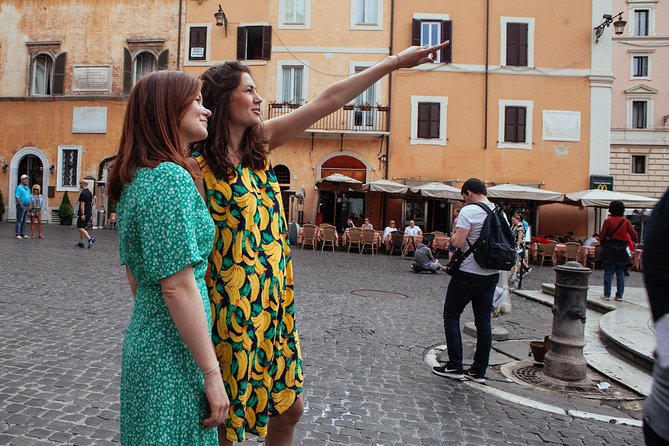
Price From
1.00 USD
Receive a warm welcome to Rome on a private tour that will kick off your time in the city in the best way possible! In only 2 hours, a local guide will get you acquainted with Rome to help you enjoy the rest of your stay to the fullest. Discover where to find Piazza Navona and Largo di Torre Argentina, and how to explore them away from the crowds. And what about that unique family-owned restaurant or that amazing local hotspot? We got you covered; the local guides are experts in the subject! Forget about touristy traps; on this city kickstart tour, your guide will point you in the right direction. Private City Kickstart Tour: Rome is one of Withlocals' signature tours available in major cities worldwide. We work with passionate local guides who earn a fair fee. We support local economies by only offering local produce and prevent over-tourism with only small non-intrusive groups. Our tours are carbon-neutral and away from the standard tourist routes._en-US
Learn More
Price From
$232.64 USD
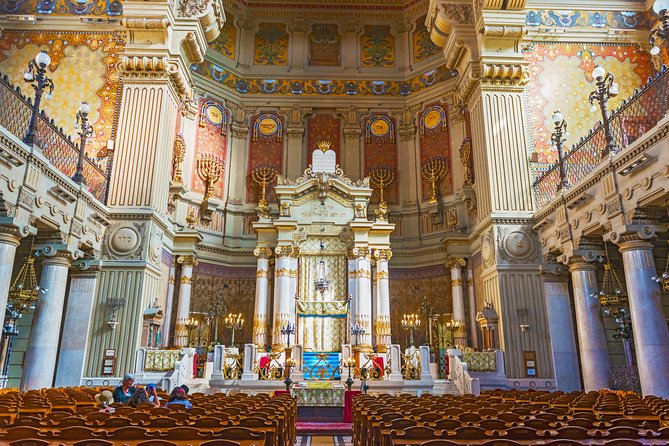
Join this tour of the historic Trastevere area to explore the world’s oldest Jewish Ghetto with the exclusive guidance of an expert archaeologist. Discover this small neighborhood, bordered by the Tiber River on one side and Piazza Venezia on the other. The quarter was established in 1555 under Pope Paul IV, who revoked all rights previously granted to the Roman Jewish community. A visit to this area offers a profound cultural and religious experience, further enriched by the remarkable Great Synagogue and the Jewish Museum._en-US
Learn More
Price From
$77.71 USD
This is a must-see! The place where the Jews were once confined and which has now become the heart of the Jewish community in Rome. Grab the chance to visit the Jewish sites with a local official tour guide from the Jewish community of Rome, and do not be afraid to get in contact if you want to take the tour in the afternoon. Everything is slow and relaxed, and a stark contrast to the hectic lifestyle of the rest of the city. The lovely Rome Synagogue and Jewish Museum are also located here and constitute a fundamental chapter of Jewish history. On Shabbath we can give you the chance to have a nice guided stroll in the Jewish quarter as well, without visiting the museum and synagogue, so no entrance tickets to be paid, no hearing devices in this case. For more info get in contact._en-US
Learn More